Water Tank Cleaning Services in UAE
Professional water tank cleaning for villas, apartments, buildings, offices, and commercial properties. Pro H Clean helps remove sediment, dirt, sludge, bad odors, and hidden contamination from water tanks using a careful cleaning process designed to improve water hygiene and protect daily water use.
Water Tank Cleaning Page Guide
Professional Water Tank Cleaning for Safe Daily Water Use
Water tanks collect dust, sand, sediment, rust particles, algae traces, and organic buildup over time, especially in hot weather and in properties where the tank is exposed to outdoor conditions. Even when water looks clear from the tap, the inside of the tank may contain deposits at the bottom, dirty corners, stained walls, or unpleasant odors that affect water quality.
Pro H Clean provides a structured water tank cleaning service for residential and commercial properties. The goal is not only to make the tank look clean, but to remove the hidden dirt that usually settles inside the tank and around the water level line. Our team handles the job carefully from inspection to draining, scrubbing, rinsing, and final cleaning.
This service is suitable for villas, apartments, shared buildings, staff accommodations, offices, shops, restaurants, warehouses, and facilities that depend on stored water. Whether you need a one-time cleaning after a long period without maintenance or regular tank cleaning as part of property care, we prepare the service according to the tank condition, size, access point, and level of buildup.
Clean water starts from a clean tank. If the tank has not been cleaned for months, the safest decision is to inspect it and remove the buildup before it affects daily use.
When should you request water tank cleaning?
You should consider booking water tank cleaning if you notice a change in water smell, visible particles, low water clarity, stains around taps, unusual color, or if the tank has not been cleaned for a long time. Cleaning is also recommended after moving into a new property, after maintenance work, after construction dust exposure, or before handing over a villa or building.
- Bad smell coming from stored water.
- Sand, dust, or small particles appearing in water.
- Tank not cleaned for several months.
- Villa, apartment, or building prepared for new tenants.
- Water tank exposed to heat, dust, insects, or open surroundings.
- Routine maintenance for homes, offices, and commercial properties.
Why choose Pro H Clean for water tank cleaning?
Our cleaning team focuses on practical results: removing accumulated dirt, improving hygiene, and preparing the tank for cleaner water storage. We use a careful step-by-step approach instead of quick surface washing, because the most important dirt is usually found at the bottom, corners, internal walls, and around fittings.
Why Water Tank Cleaning Matters
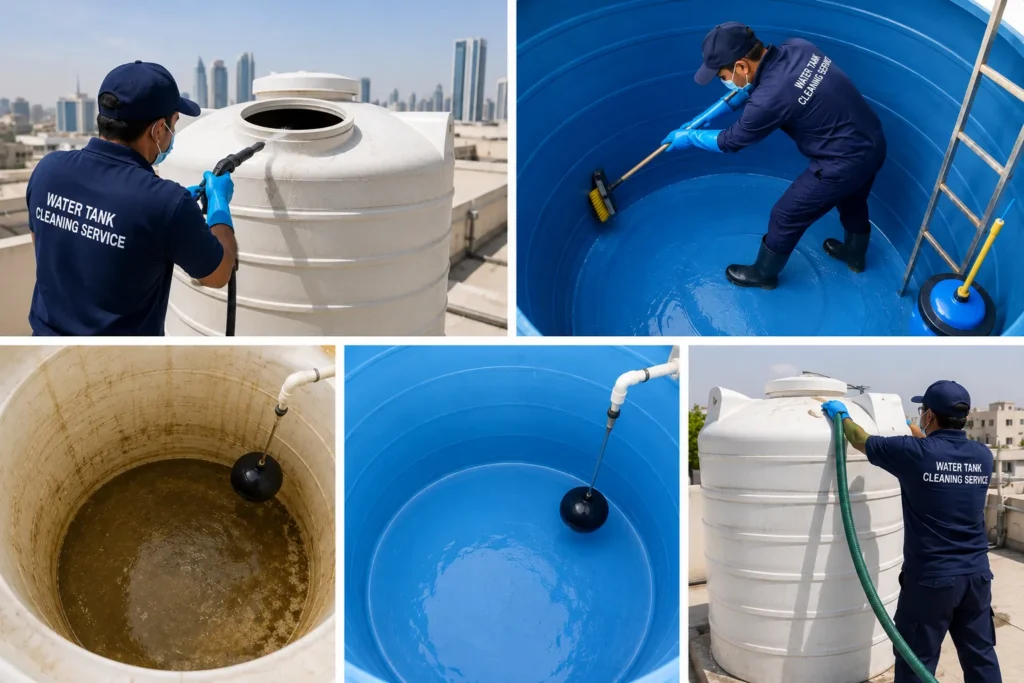
Water tank cleaning is not a luxury service. It is an important part of property maintenance, especially in villas, buildings, offices, warehouses, restaurants, and staff accommodations where stored water is used every day. A tank may look normal from the outside while the inside contains sediment, dust, sand, algae traces, rust marks, insects, or layers of dirt sitting at the bottom.
In hot weather, stored water can be affected faster when the tank is not cleaned regularly. Dust can enter through loose covers, maintenance openings, rooftop exposure, damaged seals, or old plumbing connections. Over time, this buildup may affect water smell, clarity, and hygiene. That is why a professional water tank cleaning service helps protect the water source before the problem reaches taps, kitchens, bathrooms, laundry areas, or commercial use points.
The cleanest tap water still depends on the condition of the tank that stores it. If the tank is dirty, the water quality inside the property can be affected.
Common problems caused by dirty water tanks
A dirty tank can create several problems that are not always visible immediately. Some signs appear through smell, color, particles, or stains. Other issues remain hidden inside the tank until cleaning is done. Regular inspection and cleaning help reduce these risks and keep the water storage system in better condition.
- Bad water smell: Stored water may develop an unpleasant odor when dirt, organic buildup, or stagnant deposits collect inside the tank.
- Sediment at the bottom: Sand, dust, and fine particles often settle at the base of the tank and move into the water supply during use.
- Dirty tank walls: Internal walls can collect stains, algae traces, scale marks, and layers of buildup over time.
- Water discoloration: Rust particles, dirt, or old deposits may affect the water appearance.
- Blocked filters or fixtures: Dirt from the tank can move through lines and affect filters, taps, shower heads, or appliances.
- Poor hygiene impression: For villas, offices, and commercial properties, an unclean tank can affect trust, comfort, and property standards.
Properties that need regular tank cleaning
Different properties use water tanks in different ways. A villa may need cleaning because of rooftop exposure and family daily use. A building may need scheduled cleaning because many residents depend on one storage system. A restaurant, office, warehouse, or facility may need more careful maintenance because water use is part of daily operations.
How often should a water tank be cleaned?
The cleaning frequency depends on the tank condition, property type, water usage, rooftop exposure, cover quality, and whether the tank has been cleaned before. As a practical rule, many properties benefit from regular water tank inspection and scheduled cleaning to prevent heavy buildup before it becomes a visible problem.
If the water tank is located on a roof, close to dust, exposed to heat, or has not been opened and checked for a long time, it is better to book cleaning before waiting for a bad smell or visible particles. Preventive cleaning is usually easier, faster, and more effective than cleaning after heavy contamination has already built up.
Signs your tank needs cleaning now
You do not always need to wait for a major water problem. Some warning signs are enough to request inspection and cleaning. If one or more of these signs appear, the tank may need professional cleaning.
- Water has a strange or unpleasant smell.
- You see sand, dust, or tiny particles in water.
- The tank cover is loose, old, broken, or not sealed well.
- The tank has not been cleaned for many months.
- You moved into a new villa, apartment, or office.
- There was recent construction, renovation, or rooftop maintenance.
- The water color looks different from normal.
- There are insects, dirt, or stains around the tank area.
Our Water Tank Cleaning Process
A professional water tank cleaning job should follow a clear process. Quick rinsing is not enough when the tank contains sediment, stains, sludge, dust, or buildup around the internal walls. At Pro H Clean, we clean water tanks step by step to remove visible and hidden dirt from the areas where buildup usually collects.
The service starts with checking the tank condition, access point, size, water level, and surrounding area. Then the team prepares the tank for cleaning, removes dirty water when needed, clears sediment, scrubs internal surfaces, rinses carefully, and prepares the tank for refilling. The exact process may change depending on whether the tank is for a villa, apartment building, office, restaurant, warehouse, or commercial facility.
Good tank cleaning is not only about washing the visible surface. The most important work is removing sediment, buildup, and dirt from the bottom, corners, walls, and fittings.
Step 1: Tank inspection and access check
Before cleaning starts, the team checks the water tank opening, cover, internal condition, level of dirt, access safety, and the general area around the tank. This step helps us understand whether the tank needs standard cleaning, deeper scrubbing, extra sediment removal, or careful handling because of limited access.
- Check the tank location and access point.
- Inspect dirt level, odor, stains, and sediment.
- Check the cover, edges, and surrounding area.
- Identify whether the tank is suitable for direct cleaning.
- Prepare the tools needed for the tank size and condition.
Step 2: Draining and sediment removal
Many tanks collect heavy dirt at the bottom. This layer may include sand, dust, rust particles, old deposits, and organic residue. After preparing the tank, the dirty water and loose sediment are removed as needed so the internal surfaces can be cleaned properly.
This stage is important because sediment can stay hidden under the water line for a long time. If it is not removed, the tank may still affect water quality even after a quick wash. That is why we focus on removing the settled buildup before moving to scrubbing and rinsing.
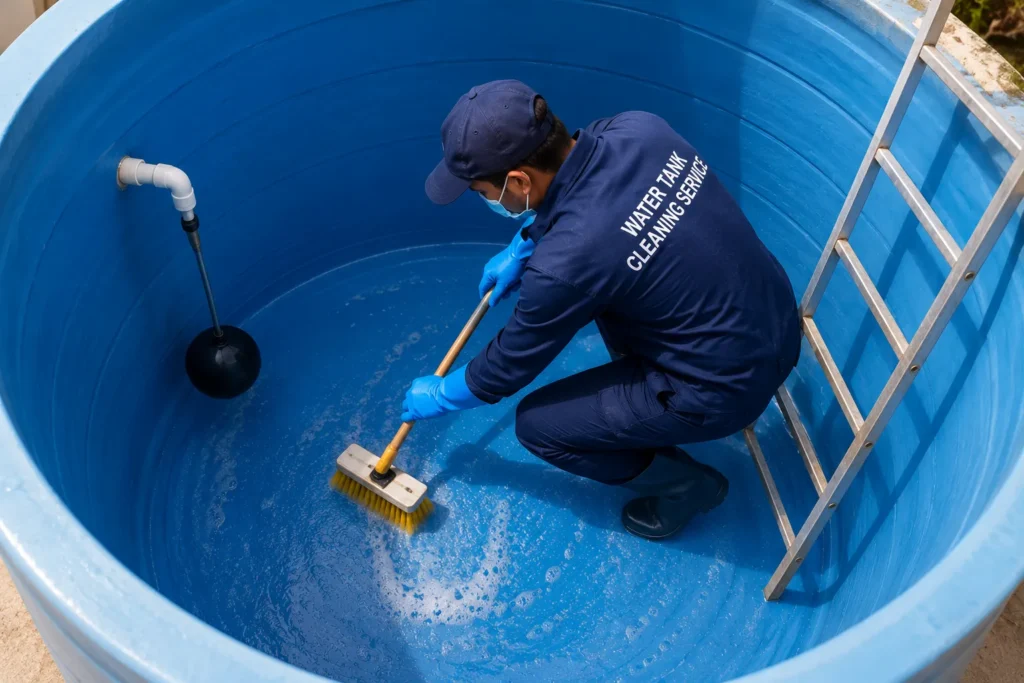
Step 3: Internal wall and floor scrubbing
After sediment removal, the internal walls, floor, corners, and water level marks are scrubbed carefully. The purpose is to remove dirt attached to the tank surface, stains caused by long storage, slippery buildup, and deposits that simple water rinsing cannot remove.
- Scrubbing tank walls and internal surfaces.
- Cleaning the bottom where sediment usually collects.
- Focusing on corners, edges, and hard-to-reach areas.
- Removing stains, deposits, and attached dirt.
- Cleaning around fittings and water line marks where possible.
Step 4: Rinsing and final cleaning
Once scrubbing is complete, the tank is rinsed carefully to remove loosened dirt and cleaning residue. The goal is to leave the tank clean, clear, and ready for refilling. Our team checks the internal surfaces again to make sure the main dirt, sediment, and visible buildup have been removed.
The tank cleaning result depends on the original condition of the tank, age, material, access, and how long it has been without maintenance. In most cases, proper cleaning makes a clear difference in smell, appearance, and water storage hygiene.
Step 5: Cover check and service advice
After cleaning, the cover and surrounding area are checked because a clean tank can get dirty again if the cover is loose, cracked, or exposed. We also advise the customer if the tank needs regular cleaning, better sealing, or follow-up maintenance.
What makes professional tank cleaning better than basic washing?
Basic washing may remove some surface dirt, but it usually misses the main problem: the heavy buildup at the base of the tank and the dirt attached to corners and internal walls. Professional cleaning gives more attention to the hidden areas that affect water storage quality.
| Cleaning Point | Basic Washing | Professional Tank Cleaning |
|---|---|---|
| Sediment at bottom | May remain inside | Removed carefully as part of the process |
| Internal walls | Light rinse only | Scrubbed to remove attached dirt and stains |
| Corners and edges | Often missed | Targeted during cleaning |
| Odor source | May return quickly | Reduced by removing buildup and dirty deposits |
| Final check | Usually not detailed | Tank is checked after cleaning before refilling |
Types of Water Tanks We Clean
Water tanks are not all the same. Each property may have a different tank location, size, material, access point, and level of dirt. Some tanks are easy to reach on rooftops, while others are located underground, inside service rooms, above villas, or connected to larger building systems. That is why Pro H Clean prepares the water tank cleaning service according to the actual tank condition instead of using one fixed method for every property.
Our team handles residential and commercial water tank cleaning for daily-use water storage systems. Whether the tank is small, large, exposed to dust, affected by smell, or has visible sediment at the bottom, we focus on removing buildup from the internal walls, base, corners, and reachable fittings.
The right cleaning method depends on tank size, location, access, material, and how much dirt has collected inside.
Villa water tank cleaning
Villas often have rooftop or outdoor water tanks exposed to heat, dust, wind, and maintenance activity. If the tank cover is not sealed well, sand and insects may enter over time. Villa water tank cleaning is important because families depend on stored water for bathrooms, kitchens, laundry, garden use, and daily cleaning.
Pro H Clean provides villa water tank cleaning as a separate service or as part of wider villa maintenance cleaning. This is especially useful before moving into a new villa, after renovation, after long vacancy, or when the water has an unusual smell or visible particles.
Apartment and building water tank cleaning
Apartment buildings and shared residential properties usually depend on larger water storage systems. When the tank is not cleaned regularly, sediment and dirt can affect many apartments at the same time. For this reason, water tank cleaning for buildings should be handled carefully with proper inspection, draining, scrubbing, rinsing, and final checking.
This service is suitable for landlords, building managers, facility supervisors, real estate companies, and tenants who want to improve the hygiene of stored water. Regular cleaning can help maintain better water quality for kitchens, bathrooms, and shared property use.
Commercial water tank cleaning
Commercial properties need clean water storage for daily operation, staff use, cleaning tasks, restrooms, and facility hygiene. Offices, shops, restaurants, warehouses, salons, clinics, gyms, and staff accommodations may all require scheduled tank cleaning depending on water use and maintenance standards.
- Office buildings and business centers.
- Restaurants, cafeterias, and food service spaces.
- Warehouses and industrial facilities.
- Staff accommodations and labor camps.
- Retail shops, salons, gyms, and clinics.
- Schools, nurseries, and managed properties.
Rooftop water tanks
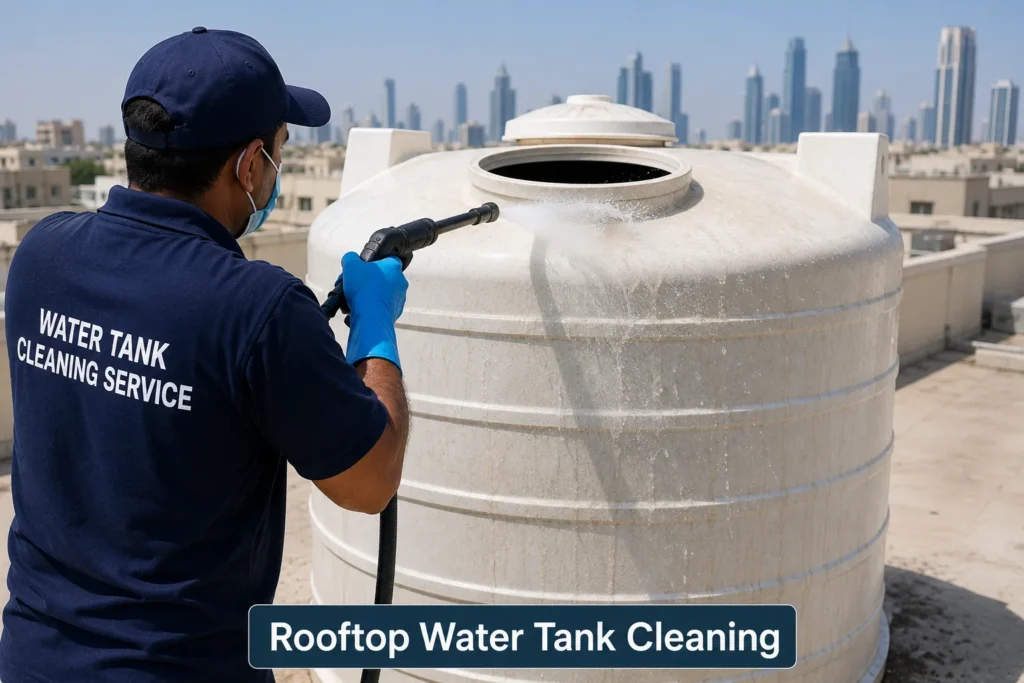
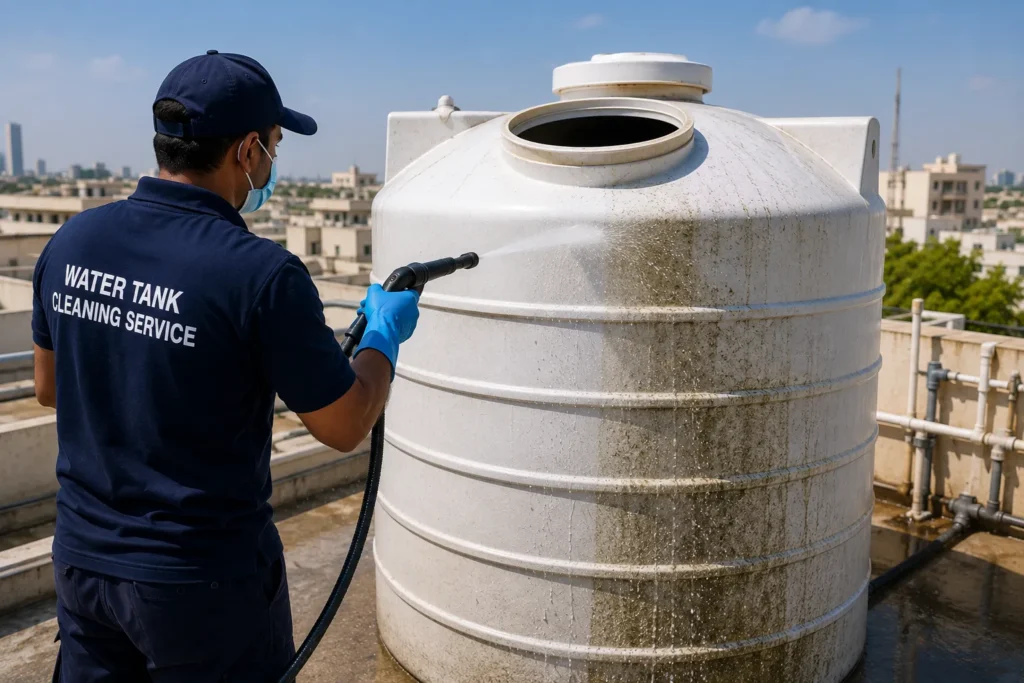
Rooftop tanks are common in villas and buildings. They are more exposed to sun, dust, sand, insects, and outdoor maintenance work. If the tank cover is old, loose, cracked, or not closed properly, contamination can enter faster. Rooftop water tank cleaning usually requires safe access, careful draining, internal scrubbing, and checking the cover after cleaning.
If your rooftop tank is close to AC units, construction dust, open areas, or birds, it should be inspected more often. Even when water seems normal, the inside of the tank may contain a layer of dirt that only appears after draining.
Underground water tanks
Underground tanks may collect sediment, sludge, stains, and moisture-related buildup. They also need careful access because the opening, depth, and ventilation conditions can differ from one property to another. Cleaning underground water tanks requires more attention to safety, visibility, and proper removal of settled dirt.
Pro H Clean checks the access point and condition before starting the cleaning process. If the tank has heavy dirt, bad smell, or has not been cleaned for a long time, the team may need extra time for draining, sediment removal, scrubbing, and rinsing.
Plastic, fiberglass, and concrete tanks
The material of the tank affects how dirt appears and how cleaning should be handled. Plastic and fiberglass tanks may show stains, slippery buildup, and deposits around the water line. Concrete tanks may collect heavier sediment, rough-surface dirt, and deeper stains. Each material needs careful cleaning without damaging the internal surface.
| Tank Type | Common Issues | Cleaning Focus |
|---|---|---|
| Rooftop tank | Dust, heat exposure, insects, loose cover | Wall scrubbing, sediment removal, cover check |
| Underground tank | Sludge, stains, moisture buildup, heavy deposits | Deep cleaning, draining, bottom and corner cleaning |
| Villa tank | Sand, smell, long gaps without maintenance | Family-use hygiene and full internal cleaning |
| Building tank | Large water use, shared supply, sediment buildup | Scheduled cleaning and detailed inspection |
| Commercial tank | Daily heavy use, facility hygiene needs | Regular maintenance and practical cleaning plan |
Water tank cleaning for move-in and property handover
Water tank cleaning is highly recommended before moving into a new villa, apartment, or commercial property. Many tenants focus on floors, kitchens, bathrooms, and furniture, but forget the water tank. If the tank was not cleaned by the previous occupant or during construction, dust and sediment may still be inside.
For property handover, water tank cleaning adds an important hygiene layer and helps prepare the place for daily use. It can be combined with home cleaning, villa cleaning, pest control, carpet cleaning, or sofa cleaning depending on the property condition.
Water Tank Cleaning FAQ
How do I know if my water tank needs cleaning?
Your water tank may need cleaning if the water has a bad smell, visible particles, unusual color, stains around fixtures, or if the tank has not been cleaned for a long time. You should also book cleaning after moving into a new property, after renovation work, or when the tank cover is loose or exposed.
Do you clean villa water tanks?
Yes. Pro H Clean provides villa water tank cleaning for rooftop tanks, outdoor tanks, indoor service-area tanks, and other residential water storage systems. The cleaning process depends on the tank size, location, access, and condition.
Do you clean building and commercial water tanks?
Yes. We clean water tanks for apartment buildings, offices, restaurants, warehouses, shops, staff accommodations, and other commercial properties. Larger tanks or heavily dirty tanks may need more time and preparation.
What does your water tank cleaning include?
The service may include tank inspection, draining when needed, sediment removal, internal wall scrubbing, corner cleaning, rinsing, and final checking. The exact steps depend on the tank type, access, dirt level, and property condition.
Can water tank cleaning remove bad smells?
In many cases, cleaning helps reduce bad water smell by removing sediment, organic buildup, and dirt inside the tank. If the smell is caused by plumbing, external contamination, or another source, additional inspection may be needed.
How long does water tank cleaning take?
The time depends on the tank size, amount of water, dirt level, access point, and whether the tank is rooftop, underground, residential, or commercial. A small residential tank can usually be completed faster than a large building or commercial tank with heavy sediment.
Should I clean the water tank before moving into a new property?
Yes. Water tank cleaning is strongly recommended before moving into a villa, apartment, or commercial property, especially if you do not know when the tank was last cleaned. This helps remove old sediment and prepare the tank for daily water use.
Can I combine water tank cleaning with other services?
Yes. You can combine water tank cleaning with home cleaning, villa cleaning, office cleaning, pest control, floor cleaning, carpet cleaning, sofa cleaning, window cleaning, and move-in cleaning depending on your property needs.